WINE RACE 2016 .. MATTc380 .. TRENT 353 .. BEN 347 ...... Garden species:- Macros 357, Micros 365, Total 722

Friday, 9 April 2010

DON'T MESS WITH ME !

There are lots of small Anoles, Geckos and lizards here, but if you like BIG then check out this Green Iguana. So called because they are bright green when young, This one is around 5 ft from head to tail and happily resides with humans alongside the boat docks with lots of his friends ! You cannot go anywhere in Cayman without seeing several of these critters.
Any moths ???

The Blue Iguana is almost extinct on the island apart from a few small areas in the more remote parts. There is a breeding programme at the Botanical Gardens where there is a small wild population, like the one pictured, and released individuals which all carry coloured marker tags. Dont get too close to these fellas as they are more aggressive than the Green Iguana. This one is about 1 metre long but they grow a lot bigger.


Every Palm tree has one or two resident Anoles


An agitated Anole flashing a warning with his brightly coloured dewlap.


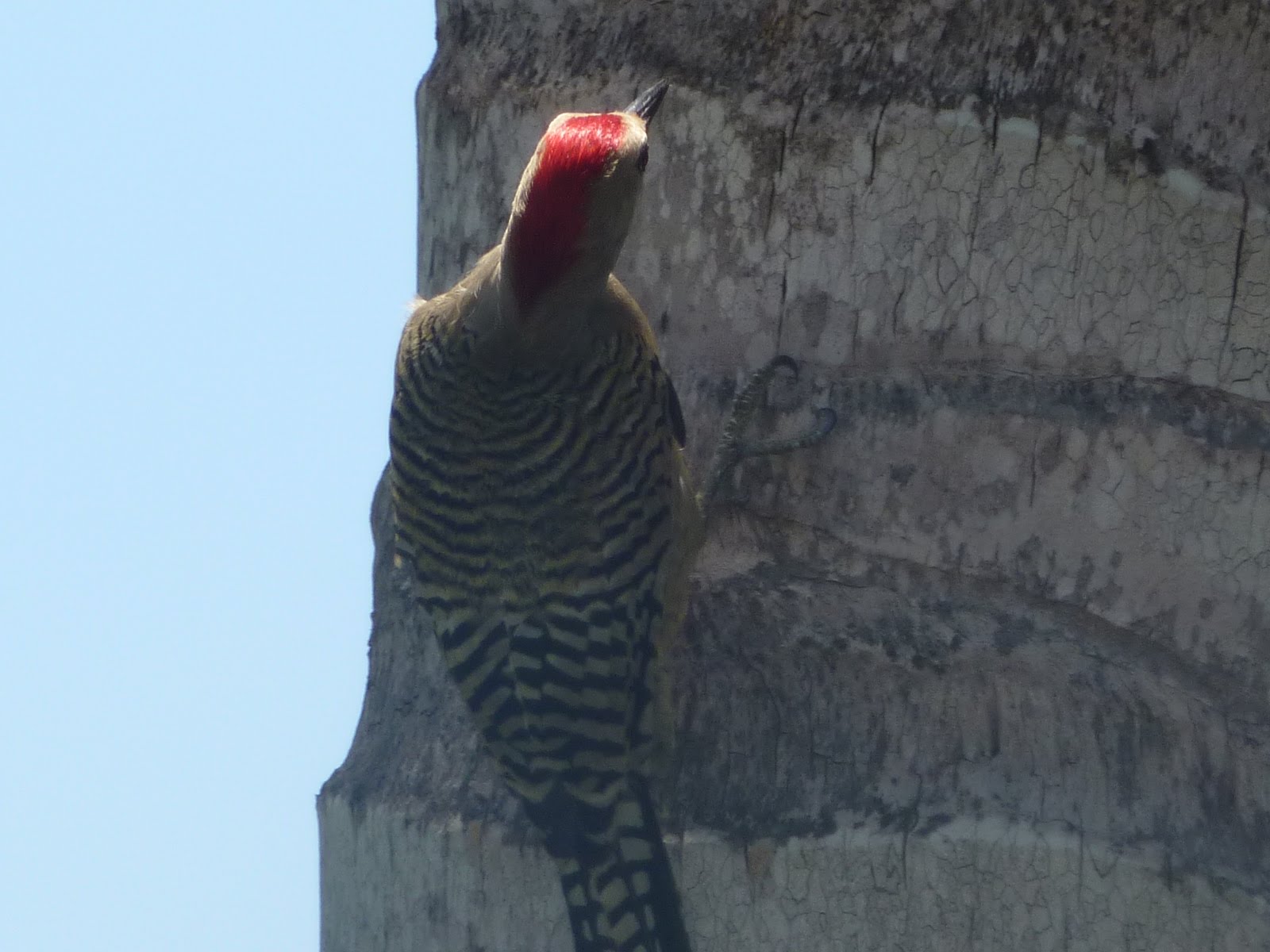
IT'S BIRDIE TIME

Thought it would make a change to see a few local birds as no different species of moths were in the trap this morning. The images are the best I could do with my point and shoot but not too bad. From top to bottom:- West Indian Woodpecker (Melanerpes supercilliaris),
Zenaida Dove (Zenaida aurita) Becoming scarce on Grand Cayman probably due to stiff competition from the colonizing, and very common, White Winged Dove (Zenaida asiatica)

Bananaquit (Coereba flaveola) Very common. This is the species endemic to Grand Cayman C.f.sharpei


Vitelline Warbler (Dendroica vitellina vitellina) The olive-grey ear coverts, eye-stripe and malar stripe is a field mark of the endemic species


Northern Mockingbird (Mimus polyglottis) Common


Thursday, 8 April 2010

THE QUICK and THE DEAD

It's no fun being a moth in the Caribbean. You need to be very fast or very big to avoid the vast array of predators. Top pic is an anole which accounts for any day flyers that settle on the trees. The next pic is a type of gecko that patrols the walls at night and if the lizards dont get you the frogs will !


Another micro ? 8mm long


And yet another unidentified species, less than 20mm across found in the makeshift trap this morning


Wednesday, 7 April 2010

Two more from the Caymans.........06/04/10

Mothing weather has been poor with a strong Noreaster steadily blowing, a welcome relief from the heat though.
Top pic is a common small moth, about 15mm across. If someone wants to name it, be my guest, I'm still struggling with UK species !
Pictured below is another common species with a wingspan of 50mm and can be seen during the day as well as the night. This one was snapped by leaning precariously over a third floor balcony as it was feeding on a palm tree flower.


Saturday, 3 April 2010

LITTLE AND LARGE .....03/04/10

Hi from the Cayman Islands.........found time to do a bit of mothing so here's a couple of examples which are two extremes of sizes. The top pic is a micro of some description and is about 10mm long. If anyone can name it, I will be well impressed.
Now check out the bottom pic, some type of hawkmoth with a wingspan of around 140mm!